East Malling Research

New Road
East Malling
Kent
ME19 6BJ
Tel : (+44) (0)1732 843833
Fax : (+44) (0)1732 849067


Press Releases


Release Date

POINSETTIAS REMAIN RED AND CHRISTMAS GOES GREENER 16/12/08


PESTICIDE BAN IS BAD NEWS FOR BRITAIN'S FOOD BASKET


5/11/08
'SCIENCE MATTERS' SAYS FARMERS 16/10/08

Chance for Soft Fruit Industry to Review its Research. Soft Fruit Day – Tuesday 11 November, East Malling Research

10/10/08

NOVEL CROPS DAY AT EAST MALLING, EXCITING NEW OPPORTUNITIES FOR UK GROWERS

11/9/08
EMR launch new strawberry breeding club at fruit focus 2008 23/7/08

EMR provides tours at fruit focus 2008

30/6/08
EAST MALLING RESEARCH ESTABLISHES NEW ROOTSTOCK CLUB 17/6/08
BRADBOURNE HOUSE AND GARDENS OPEN DAY 14/4/08

JERRY CROSS AWARDED PROFESSORSHIP
Professor in Horticultural Entomology at the University of Greenwich.

28/3/08

TOP FRUIT STORAGE DAY AT EAST MALLING TO HIGHLIGHT NEW STORAGE TECHNOLOGY

Monday 31 March 2008, East Malling Conference Centre

10/3/08
SIXTH-FORM STUDENTS CELEBRATE THE LAUNCH OF NATIONAL SCIENCE AND ENGINEERING WEEK AT EAST MALLING RESEARCH 7/3/08

EAST MALLING RESEARCH AND MEIOSIS Ltd END CONTRACT EARLY as New club is established

26/2/08

VICKY KNIGHT RETIRES FROM EAST MALLING RESEARCH

26/2/07

Dr Colin Gutteridge, CEO for East Malling Research speaks to Amanda Fisher of Kent TV about Defra's recent decision regarding curation of the National Fruit Collection.  Broadband TV programme available at:

9/1/08
Press Release Archives >> 2004 2005 2006 2007 2008 2009 Current Year


9 January 2008

Transcript of interview with Dr Colin Gutteridge, CEO for East Malling Research regarding the National Fruit Collection for Kent TV


http://www.kenttv.com/programmes.php?PID=669&Title=East+Malling+Research+-+Brogdale

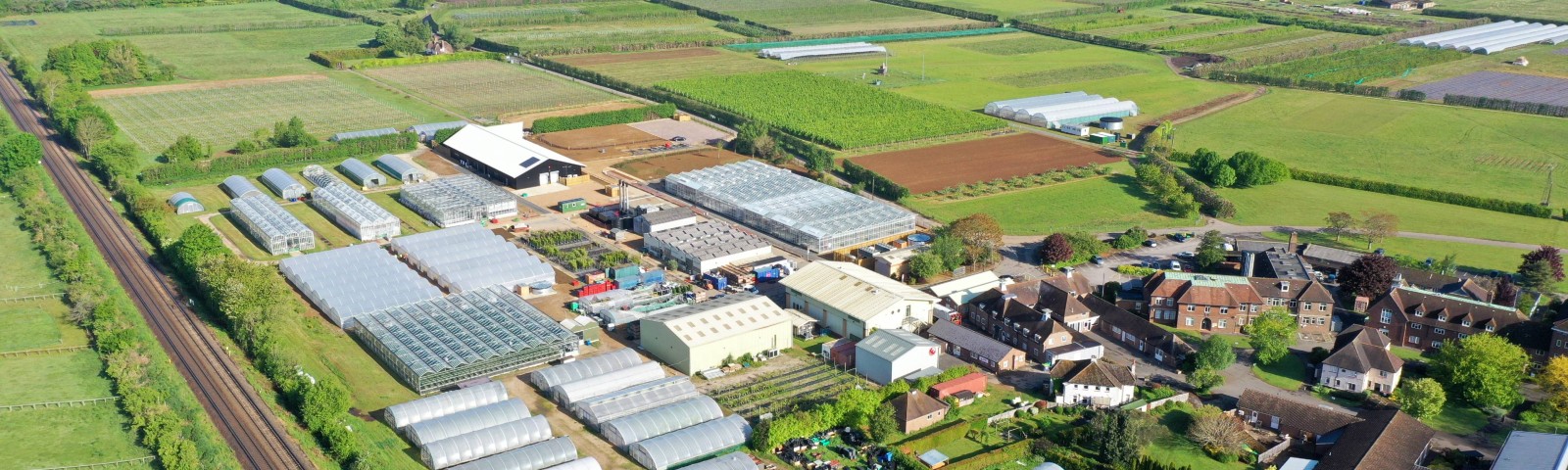
A narrow country lane hides one of Kent’s best-kept agricultural secrets. Blink and you could miss it, but down this driveway lies the former East Malling Research Station – formerly a government-backed institution boasting a long and internationally-renowned history in experimental work on fruit trees.
These days that scientific research is continued by an independent company on a site covering more than 200 hectares on the outskirts of Maidstone.
“East Malling Research is the leading institute in the United Kingdom for fruit science. It has a fantastic international reputation and it has a ninety-year-old history, and it’s developed many of the techniques and methods that are used by the fruit industry world-wide, and we have a 140 active international collaboration with university departments and research institutes, so we have a significant reputation.”
That reputation drew Colin Gutteridge to East Malling Research eighteen months ago. During his short time as the helm he’s had to cope with a controversy that has rocked the whole county. It involved the future of another highly-acclaimed national fruit collection based at Brogdale near Faversham. A proposal to amalgamate the two collections split opinions across Kent. It was the intention of the East Malling consortium, led by Imperial College along with the Brogdale Trust, and favoured by Kent County Council, to transplant the Brogdale collection to East Malling.
Arguments for and against each side ranged over the following months When the Department for Environment, Food and Rural Affairs ruled in favour of the collection remaining at Brogdale, the decision was bad news for East Malling Research.
DR COLIN GUTTERIDGE, CEO, East Malling Research:
“We believed that putting the national fruit collection on our site would enable us to establish an educational attraction based around the science that we deliver that would make the collection more accessible to a wider range of people.”
AMANDA FISHER VO:
While DEFRA’s decision to leave the National Fruit Collection at its present site in Faversham was disappointing, its action in awarding the collection’s research contract to an institution outside Kent was a particularly bitter blow to East Malling Research.
“I have to say congratulations to the people who’ve won the bid, but the science part of the bid is with the University of Reading, so Kent loses out overall because although the trees are remaining at Brogdale, the science work within the bid is moving to the University of Reading, so it is moving away from Imperial College at Wye and moving away from East Malling, so actually I don’t really believe this is a win for Kent, I think it’s a 2-1 defeat if you want to put it in football analogy. And the moving of the collection to East Malling would have maintained much more scientific research within Kent than will happen in the future.”
Scientific research is the life-blood of organisations like East Malling Research.
“Although we’re a long-standing research institute, most of our funding has historically come from government, and it is in steep decline. And there are very real questions over our medium and long-term survival as a research institute. This decision is not helpful in that respect because it closes down you know avenues of commercial and technical development that would have been possible if the collection had moved here.”
AMANDA FISHER VO:
East Malling Research may have failed to take Brogdale’s National Fruit Collection to west Kent , but it will get a second chance to submit another bid when the collection comes up for tender again in five years time. Until then, the company is busy getting a new business plan underway.
DR COLIN GUTTERIDGE: “We intend to go in a very commercial direction, developing the resources of the estate to help support our scientific activities. I think East Malling Research is still vital to the research of the fruit industry, so we’re doing things like er planting the largest organic apple orchard in the UK, developing a food business, developing our conference and hospitality business, so we’ve got many things to do, but the fact that we didn’t win this bid is a significant blow to our future.”

 Back to Press Releases


26 February 2008


VICKY KNIGHT RETIRES FROM EAST MALLING RESEARCH

After a career spanning 35 years at East Malling, Vicky Knight, East Malling Research’s (EMR) world-renowned raspberry breeder, retired today.   


After a career spanning 35 years at East Malling, Vicky Knight, East Malling Research’s (EMR) world-renowned raspberry breeder, retired today.   


In her time at East Malling, Vicky has released 11 raspberry varieties and 7 Ribes varieties (currants, gooseberries) to the UK horticultural industry, plus 3 raspberry varieties for the amateur market and 3 for overseas markets. In the last 5 years the highest royalties have been returned on ‘Octavia’, ‘Redpoll’ and ‘Pax’.


Of her recent releases, ‘Octavia’, a very late ripening summer fruiting raspberry, has been particularly successful, and Vicky hopes that one of the last varieties to be released from her breeding programme, ‘Autumn Treasure’, will prove a real winner for the commercial soft fruit industry and amateurs. The needs of the industry have always been uppermost in her approach and she believes breeding can provide solutions to help the UK compete in a global market.


In 2005, ‘Malling’ Autumn Bliss, which was bred by Elizabeth Keep (retired in 1983) and developed by Vicky, won an Outstanding Cultivar award from the American Society for Horticultural Science, the first time they have given the award outside of North America. Its fruiting season meant that primocane fruiting raspberry production became a commercial reality in the UK. It has been grown all over the world, has been used extensively in many breeding programmes and continues to be a great favourite amongst amateur gardeners.


As an authority on the subject, Vicky has trained raspberry breeders from around the world who have come to EMR over the years, specifically to learn from its experts.  She has been invited to deliver keynote lectures by the RHS Fruit Group, the Linnean Society, the Scottish Society for Crop Research, and the Scientific Pomological Society of Serbia and Montenegro. Vicky had presented her results at eight International Rubus and Ribes Symposia between 1976 and 2005 and co-hosted the 8th Symposium in the UK in 2001.  She has trained dozens of undergraduate students from the UK and overseas over the years, several of whom have gone on to do PhDs and/or have become plant breeders. “It has been a joy to work with so many delightful young people” said Vicky.


Dr Mike Solomon, former Science Director for East Malling Research said "Vicky Knight has had a highly successful career as a plant breeder, having produced a series of outstanding raspberry varieties. In addition, she leaves a legacy of raspberry germplasm from a wide range of genetic sources, which will greatly benefit future breeding programmes. East Malling and the raspberry industry will miss her! "


Vicky read Genetics at the University of Liverpool, obtaining her degree in 1969. Her passion for plant breeding began at the National Vegetable Research Station, Wellesbourne, looking at uniformity in carrots and virus resistance in spinach. She moved to East Malling in 1972 to breed blackcurrants, gooseberries, redcurrants and raspberries, before concentrating exclusively on raspberries from 1984.


On her retirement, Vicky hopes to do more of the activities she enjoys, including gardening, walking, Scottish dancing and travelling.


***ENDS***

Notes for Editors:


East Malling Research (EMR) is an independent provider of research and consultancy serving the food chain and other sectors of the land-based industry. EMR builds on 90 years experience of successfully delivering cutting-edge research and development. www.eastmallingresearch.com


Raspberry breeding and trialling at East Malling Research (EMR) has been jointly funded by: the Department for Environment, Food and Rural Affairs (Defra), Horticultural Development Council (HDC), East Malling Trust for Horticultural Research, Meiosis Limited and the UK soft fruit industry.  All raspberry varieties released since 1997 have been commercialised by Meiosis Limited www.meiosis.com


3.   The raspberry breeding programme at East Malling Research (EMR) aims to develop a range of high quality varieties with overlapping seasons.  A major emphasis for new varieties is placed on excellent fruit quality, including good flavour, attractive appearance and good shelf life.  In addition, improved resistance to pests and diseases is an important objective.


For further information please contact:

Communications Office

Tel: 01732 523723

Fax: 01732 849067

Email: ursula.twomey@emr.ac.uk

Back to Press Releases


26 February 2008


EAST MALLING RESEARCH AND MEIOSIS Ltd END CONTRACT EARLY as New club is established


East Malling Research (EMR) and their licensing agents, Meiosis Ltd are to end their long standing relationship on the commercialisation of EMR’s strawberry varieties, two years ahead of schedule, making way for the establishment of a new Strawberry Breeding Club.


The decision follows a formal request from EMR and the Horticultural Development Council (HDC) who are working with EMR to establish new funding arrangements for strawberry breeding in the UK. The new Club is seeking up to ten shareholder members from the UK and overseas. The request was unanimously approved at a meeting on 13 February, of all those currently funding strawberry breeding at EMR.


Establishment of the Strawberry Breeding Club will allow EMR to restructure its funding base for strawberry breeding and to bid for a new tranche of strategic funding from the Department for Environment, Food and Rural Affairs (Defra). This is vital to ensure the future of the national strawberry breeding programme and EMR’s position as a world-leading centre for strawberry research and development.


 It is hoped that the new Strawberry Breeding Club will give EMR access to excellent distribution networks at an early stage in variety development and quicker routes to market internationally, as members can arrange and select from early trials established under their country’s specific growing conditions.


Dr Colin Gutteridge, Chief Executive Officer at EMR said “this  proposed change in the funding base for strawberry breeding at EMR is designed to be the catalyst that will liberate our  pipeline of new opportunities and help EMR to achieve its aim of being the world-leading centre for strawberry breeding. A further tranche of strategic funding from Defra is necessary to underpin the development of the national programme but in the long term we aim to make the programme self-financing. Meiosis will continue to hold the commercialisation rights to our legacy varieties and we will continue to work with them to maximise uptake of EMR varieties by the European strawberry industry.”


Since they first began commercialising EMR-bred strawberry varieties in 1990, Meiosis Ltd and their predecessor NSA Plants Ltd have made sales of about 200 million plants of 20 strawberry varieties in the UK, Europe, the US and South Korea.  Meiosis Ltd will continue to trial and commercialise EMR-bred varieties which are already in or scheduled for grower trials over the next 5 years. 


***ENDS***


Notes for Editors:


1.   Soft fruit breeding and trialling at East Malling Research (EMR) has been jointly funded by: the Department for Environment, Food and Rural Affairs (Defra), the Horticultural Development Council (HDC), East Malling Trust for Horticultural Research, Meiosis Limited, and the UK soft fruit industry.  All strawberry varieties released from the EMR programme since 1990 and raspberry varieties released since 1997 have been commercialised by Meiosis Limited.


2.   The strawberry breeding programme at East Malling Research (EMR) aims to develop a range of high quality varieties with overlapping seasons, which crop in succession from April to October.  A major emphasis for new varieties is placed on excellent fruit quality, including good flavour, attractive appearance, good shelf life and good suitability for 60 day cropping.  Improved resistance to pests and diseases is another important objective.


East Malling Research (EMR) is an independent provider of research and consultancy serving the food chain and other sectors of the land-based industry. EMR builds on 90 years experience of successfully delivering cutting edge research and development. www.eastmallingresearch.com


Meiosis Ltd focus on the commercial exploitation of new soft fruit cultivars. www.meiosis.co.uk


Department for Environment, Food and Rural Affairs (Defra) is a UK government department. www.defra.gov.uk


Horticultural Development Council (HDC) is a statutory body who administer the collection of an'industry levy' to fund essential near-market research and development for the benefit of UK horticulture. www.hdc.org.uk


For further information please contact:

Dr Colin Gutteridge                       EMR Communications              Meiosis Ltd

Chief Executive Officer, EMR     

T +44 (0)1732 843833                  T +44 (0)1732 523723             T +44 (0)1732872711

F +44 (0)1732 849067                  F +44 (0)1732 849067              F +44 (0)1732 872712

E colin.gutteridge@emr.ac.uk        E ursula.twomey@emr.ac.uk    E meiosis@meiosis.co.uk

Back to Press Releases


            7 March 2008

 SIXTH-FORM STUDENTS CELEBRATE THE LAUNCH OF NATIONAL SCIENCE AND ENGINEERING WEEK

AT EAST MALLING RESEARCH ON 7 MARCH 2008

 In a celebration of science, East Malling Research is hosting a conference for 16 -18 year olds on Friday 7th March, at the East Malling Conference Centre, to coincide with the launch of National Science and Engineering Week. This event, sponsored by Research Councils UK, will start with a morning of talks delivered by young scientists at the start of their career. There will be the opportunity for students to chat informally with the scientists over lunch and to browse scientific posters on display. After lunch, students will split into small groups for interactive sessions at three locations: the molecular laboratory, the research glasshouses and the organic field area. This will provide a forum for young adults to discuss and debate scientific ideas, such as water use and climate change, genetics and molecular advances and pest control, both amongst themselves and with young scientists. It will provide access to science in their local community and in a real world environment and dispel common stereotypes about scientists and key scientific issues of the day. 

Schools attending:

Sutton Valance School, Maidstone The Marsh Academy, New Romney
Queen Elizabeth’s Grammar School, Faversham Herne Bay High, Herne Bay

Places have been limited to up to 50 students and teachers to encourage discussion.

Timetable: Friday 7 March
10:00 – 10:15     Students arrive
10:15 – 12:00     Talks in the East Malling Conference Centre               
12:00 – 12:45     Lunch
12:45 – 14:35     Visits to scientific research areas: organic field area,
                         molecular biology laboratory and glasshouses

 ***ENDS***

Notes for Editors:

  1. East Malling Research (EMR) is an independent provider of research and consultancy serving the food chain and other sectors of the land-based industry. EMR builds on 90 years experience of successfully delivering cutting edge research and development. www.eastmallingresearch.com
     
  1. Research Councils UK (RCUK) is a strategic partnership through which the UK’s research councils work together to champion the research, training and innovation they support. For more information see www.rcuk.ac.uk
     
  2. National Science and Engineering Week (formerly National Science Week) runs from the 7th to 16th March and is an opportunity for people of all ages, areas and organisations to take part in science, engineering and technology activities.  It is coordinated by the BA in partnership with the Engineering and Technology Board and is funded by the Department for innovation, Universities and Skills. For more information see www.the-ba.net/the-ba/Events/NSEW/

For further information please contact:

Chantelle Jay
Main Reception Tel: 01732 843833       
Direct Tel : 01732 523751         
Fax: 01732 849067
Email: chantelle.jay@emr.ac.uk  

Back to Press Releases


10 March 2008


TOP FRUIT STORAGE DAY AT EAST MALLING TO HIGHLIGHT NEW STORAGE TECHNOLOGY

Monday 31 March 2008, East Malling Conference Centre


The East Malling Research Association (EMRA) and Marden Fruit Show Society, have invited a leading European researcher, to inform U.K. growers of a major development in fruit storage known as “Dynamic Controlled Atmosphere (Dynamic CA)” storage, at their annual Top Fruit Storage Day.


Dr Angelo Zanella from the Research Centre for Agriculture and Forestry in Laimburg, Italy will explain the extent to which the technology has been progressed and applied, the novel parameters used and the potential for further development. A significant amount of fruit is currently stored using this method in the South Tyrol region of Italy, Europe’s leading producer of fruit and a major exporter to the U.K. In Dynamic CA storage, the gases in the atmosphere surrounding the fruit are changed according to the requirements of the fruit itself.


David Johnson, head of storage research at East Malling Research (EMR) will follow with a presentation on EMR’s experience of this technique using different parameters and of where the technology might fit into the U.K. industry.


David Johnson will also provide growers with an update on his latest developments and advancements in knowledge of Diffuse Browning Disorder which remains a potentially serious problem for Cox in the U.K.


New research at EMR funded by WRAP to reduce wastage of fruit and vegetables in the home will be outlined by Dr Neil Hipps of EMR. Currently, about 40% (by weight) of the food thrown away that could have been eaten is fresh fruit and vegetables. There is considerable scope to improve this situation through better management in the home and the project will provide the consumer with ideas for simple methods to prolong freshness.


This event also marks the beginning of 75th anniversary celebrations for the Marden Fruit Show Society.  Their AGM will be followed by the presentation of prizes for the Society’s Long Term Farm-Stored Top Fruit Classes competition and Judge’s report. The subsequent session looking at the history of storage technology, where it has been and where it is going will feature Robert Mitchell whose family have a long history of growing Bramley apples and David Bishop of ICA Ltd who has significant experience in storage instrumentation.


This event will take place on Monday 31 March in the East Malling Conference Centre on the EMR site.  The cost, including lunch, will be £10 for EMRA and Marden Fruit Show Society members and £20 for non-members. Booking forms are available from Jean Hodges on 01732 843833 or at jean.hodges@emr.ac.uk

***ENDS***


______________________________________________________________

Notes for Editors:

  1. East Malling Research (EMR) is an independent provider of research and consultancy serving the food chain and other sectors of the land-based industry. EMR builds on 90 years experience of successfully delivering cutting-edge research and development. www.eastmallingresearch.com


  1. East Malling Research Association is the principle conduit for the dissemination of knowledge and information from East Malling Research. EMRA is a subscription-based organisation who’s constituency currently includes growers, horticultural advisors, land owners, food producers, retailers, researchers and agricultural manufacturers. www.emra.org.uk


  1. Marden Fruit Show Society is a registered charity which promotes the better growing, grading and marketing of fruit. The Society organises the annual National Fruit Show. www.nationalfruitshow.org.uk


  1. WRAP works in partnership to encourage and enable businesses and consumers to be more efficient in their use of materials and recycle more things more often. This helps to minimise landfill, reduce carbon emissions and improve our environment.  www.wrap.org.uk


For further information please contact:

Communications Office, EMR

Tel: 01732 523723

Fax: 01732 849067

Email: ursula.twomey@emr.ac.uk

Back to Press Releases


                                                                                          20 March 2008

JERRY CROSS AWARDED PROFESSORSHIP

Dr Jerry Cross, research leader at East Malling Research (EMR), has been awarded the title of Visiting Professor in Horticultural Entomology by the University of Greenwich.  This appointment will take effect from 1 April 2008 and is for a period of three years.

 Jerry has been a research leader at EMR since 1993 carrying out research and consultancy on entomological problems in both UK and International horticulture.  His main focus is on integrated pest management with particular interests in improving spray technology, biological control with microbial agents and natural enemies and use of semiochemicals in insect pest monitoring and control. 

 His work into semiochemicals has led to a close and excellent collaboration with scientists in Professor David Hall’s research group at the Natural Resources Institute (NRI) of the University of Greenwich over the last 11 years. The success of this collaborative research programme was acknowledged with the University of Greenwich Research and Enterprise Award, 2007. This Professorship is awarded to further recognise the excellence in collaboration over many years.

 David Hall said “This collaboration has been a great success and continues to expand. The Visiting Professorship is recognition of Jerry’s immense contribution to this and the formal link will emphasise the closeness of the collaboration between NRI and EMR”.

 Jerry’s distinguished research record, widely recognised professional activities and international standing as an expert in pest management in horticultural crops aptly qualify him for this title.

 Dr Chris Atkinson, head of science at EMR, said “This award is a well deserved acknowledgement of Jerry’s abilities, not only in achieving excellent academic relevance, but also in sustaining a successful stream of both industry and government funds for his work”.

***ENDS***

Notes for Editors:

  1. East Malling Research (EMR) is an independent provider of research and consultancy serving the food chain and other sectors of the land-based industry. EMR builds on 90 years experience of successfully delivering cutting-edge research and development. www.eastmallingresearch.com
     
  1. Natural Resources Institute (NRI) is an internationally recognised multi-disciplinary centre for research, consultancy and education for the management of natural and human resources. NRI is part of the University of Greenwich. www.nri.org

For further information please contact:
Chantelle Jay or Ursula Twomey
Communications Office
Tel: 01732 523723 / 523751
Fax: 01732 849067
Email:
chantelle.jay@emr.ac.uk; ursula.twomey@emr.ac.uk

Back to Press Releases


14 April 2008


BRADBOURNE HOUSE AND GARDENS OPEN DAY

27 APRIL 2008


Bradbourne House and, for the 28th successive year, its gardens, including the Hatton Fruit Garden, at East Malling in Kent will be open to the public on Sunday 27 April from 2-5pm.  All funds raised will be donated to the National Gardens Scheme.


The Hatton Fruit Garden, formerly the walled kitchen gardens of Bradbourne House, consists of demonstration fruit tree plantings displaying 25 different fruit training methods, plus 47 varieties of apple, 28 varieties of pear and individuals of medlar, cherry, nectarine, peach and fig. Originally planted in 1945 and inspired by the fruit plantings in Louis XIV kitchen garden at Versailles, the fruit garden was set up as a memorial to the art of tree training and pruning and as a source of information for gardening enthusiasts. Although selective tree removal and replanting has occurred, many examples of the original planting remain.


Bradbourne House, will also be opened to the public for the only time in 2008.  The house displays excellent examples of Queen Anne period architecture disguising an original Tudor period house, with fine rooms, halls, staircases and a unique collection of watercolours and portraits.


There will be displays by scientists from world-renowned East Malling Research, including strawberry breeding and food chain exhibits plus a display of skulls which show how carnivores and herbivores have adapted to their particular diets.   Music will be provided by the Tamarisk Trio plus a group of enthusiasts will entertain visitors with a medley of 16th century music.  Local artist Penny Greeves will provide a display of her stained glass art. In addition, there will be juice and plant sales, children’s quiz and refreshments.


Admission £3.50.  Children (under 16) free.  Entrance on New Road, East Malling, Kent off the A20.

***ENDS***


Notes for Editors:


1. East Malling Research (EMR) is an independent provider of research and consultancy serving the food chain and other sectors of the land-based industry. EMR builds on 90 years experience of successfully delivering cutting edge research and development. www.eastmallingresearch.com


2. Bradbourne House is a beautiful grade 1 listed building set in 20 acres of parkland, close to the village of East Malling in Kent. It is owned by the East Malling Trust for Horticultural Research, a charity, together with nearly 600 acres of adjoining land. The Trust’s income supports horticultural research at the nearby world famous East Malling Research Station, and elsewhere.  www.bradbournehouse.org.uk


3. Digital photograph of fruit trees in Hatton Garden, Bradbourne House pruned into fan or arch shapes, available on request.


For further information please contact:


Communications Office                                 

Tel: 01732 523723  Fax : 01732 849067       

Email: ursula.twomey@emr.ac.uk                


East Malling Research, New Road, East Malling, Kent ME19 6BJ


Back to Press Releases


17 June 2008


EAST MALLING RESEARCH ESTABLISHES NEW ROOTSTOCK CLUB


East Malling Research (EMR), the Horticultural Development Company (HDC) and the International New Varieties Network (INN) have launched a Rootstock Club charged with breeding, developing, distributing and commercialising new rootstock breeding material from EMR, world-wide.


For UK growers, the HDC as the UK licensee for the East Malling Rootstock Club (EMRC) can now make profitable new rootstock products released from EMR’s programme, widely available to UK levy payers. This is unlike the current situation with scion material, where availability is often limited due to private Club licensing agreements.


The Rootstock Club will give EMR access to excellent distribution networks at an early stage in variety development and quicker routes to market internationally. The INN has members in the USA, Chile, South Africa, Australia, New Zealand and across Europe. In each country, members can produce virus-free (VF) certified rootstocks and premium quality VF certified finished trees. Members can arrange, evaluate and select from early trials established under their country’s specific growing conditions.


Concentration on rootstock breeding is a re-focus of EMR’s tree fruit strategy since membership of the now defunct Apple and Pear Breeding Club (APBC), where objectives included scion as well as rootstock breeding. It also aligns EMR with the current research funding strategy of the Department for Environment Food and Rural Affairs (Defra) which is concentrated around environmental and climate change issues.


Pipeline material developed by the APBC is now available for evaluation and will form the basis of the new targeted rootstock improvement programme of the EMRC. The EMRC will complete the evaluation of current APBC apple, pear and quince rootstock pipeline material with the aim of producing a range of apple, pear and quince rootstocks with desirable size control, precocity and productivity with resistance to diseases and pests where applicable. New breeding material will also be produced taking account of potential climate change scenarios using a new streamlined system previously developed in an associated project funded by Defra. EMR has a wealth of breeding lines, deriving for example, from UK, US, Canadian and Japanese material, that encompass diverse agronomic variation and a wide range of resistances to pests and diseases.


Dr Colin Gutteridge, Chief Executive Officer at EMR said “we are delighted that we have been able to continue rootstock breeding and selection at East Malling which has a long and famous association with successful rootstock development. Our partners, Defra, the HDC and INN, have shown commendable commitment to the strategic importance of developing new generations of rootstocks that are adapted to key aspects of climate change such as water use efficiency. We are sure that we have an exciting period of development ahead of us which will lead to the next generation of commercial rootstocks”


It can take 30 years to develop a rootstock.  Initial selection and first stage trialling which is carried out at EMR, takes between 7 and 10 years, even with the use of EMR’s expertise in new molecular technologies. Material is then released for HDC-funded trialling in the UK and INN-funded trials at sites around the rest of the world. Promising selections must be propagated to build up enough material for distribution before a co-ordinated world-wide release.


***ENDS***


Notes for Editors:

  1. East Malling Research (EMR) is an independent provider of research and consultancy serving the food chain and other sectors of the land-based industry. EMR builds on 90 years experience of successfully delivering cutting edge research and development. www.eastmallingresearch.com


  1. Department for Environment, Food and Rural Affairs (Defra) is a UK government department. www.defra.gov.uk


  1. Horticultural Development Company (HDC) is a statutory body who administer the collection of an 'industry levy' to fund essential near-market research and development for the benefit of UK horticulture. www.hdc.org.uk.


  1. International New Varieties Network (INN) is a worldwide nursery organisation for tree fruit variety management and commercial development. www.nurserynet.com.


  1. The rootstock breeding programme at EMR aims to produce a range of apple, pear and quince rootstocks with desirable traits such as size control to reduce the cost of pruning and simplify picking, precocious and reliable cropping, ease of propagation and freedom from suckers, good anchorage, good productivity with resistance to diseases and pests where applicable and climate change-related traits e.g. drought and flood tolerance.


  1. East Malling has a long tradition of rootstock breeding and selection dating back to the organisation’s inception in 1913. The first rootstock was released in 1914 and it is estimated that up to 80% of commercial apple trees are grown on rootstocks developed at East Malling, most commonly, rootstock M9.   The most recent rootstocks released from EMR in 2001 were EMH for the pear industry and M116 which has proved useful for apple growers in New Zealand and is currently of interest to cider producers in the UK.


For further information please contact:

Communications Office, EMR

Tel: 01732 523723

Fax: 01732 849067

Email: ursula.twomey@emr.ac.uk


Dr Kate Evans

Plant breeder

Tel: 01732 523738

Fax: 01732 849067

Email: kate.evans@emr.ac.uk


Back to Press Releases


30 June 2008


EMR provides tours at fruit focus 2008


East Malling Research (EMR) will showcase recent results and new projects in fruit research at Fruit Focus 2008, focussing particularly on water use in strawberry and also on issues like biocontrol, developing zero residue protocols for strawberry and new developments in funding of breeding research.


Preliminary results from the 2008 growing season suggest that water use efficiency in strawberry can be increased by up to 50%, without reducing berry yields.  Technologies developed at EMR are now being tested in commercial field trials and will be discussed by Dr Mark Else.  Three scheduling tools are being used to develop irrigation strategies that reduce water use but maintain yields of class 1 fruit. Effects on fruit quality are currently being determined, but improvements in berry flavour, bioactive content and shelf-life potential are expected, compared with fruit produced under conventional irrigation regimes. 


Another project which explores drought tolerance in strawberry, an issue which may become important in a changing climate, will be discussed by Nada Šurbanovski. The relative drought tolerance of different species in the strawberry genus Fragaria are being characterised by Nada, and in particular, the response of aquaporins (water channel proteins which, when open, allow movement of water molecules through plant cells) to water deficits in the roots, the site of water uptake.


Visitors can sign up to hear about these projects at EMR’s stand (number 13) on the walking tour offered by EMR around nearby plots.  A third project on the tour presented by Dr Jean Fitzgerald, will look at assessing the effect of ground cover on predators in orchards.


Information on the EMR stand will also highlight other current projects in the area of soft fruit including:


·        The launch of East Malling’s Strawberry Breeding Club

The East Malling Research Strawberry Breeding Club will be launched at Fruit Focus. In a project with strategic support from Defra, 12 industry partners have committed £975K over five years to support strawberry breeding at East Malling. The new funding arrangements will enable Head Breeder, David Simpson and his team to liberate a pipeline of new opportunities from the world-leading EMR programme.


·        Developing methods for zero residue strawberry production

Aims for this new project include the development of alternative, sustainable, non-pesticidal methods for managing Botrytis, mildew, blackspot, aphids, blossom weevil and capsid bugs on strawberry. An overall Pest and Disease Management System will be developed with the aim of reducing pesticide use by 50% and eliminating the occurrence of reportable pesticide residues on harvested fruit.


·        The raspberry breeding programme at East Malling Research

EMR's raspberry breeding programme which has been active for more than 70 years and produced leading varieties such as Autumn Bliss and Octavia, is currently unfunded and is seeking new sponsors. Contact Feli Fernández on 01732 843833, to discuss further.

***ENDS***


Notes for Editors:


  1. East Malling Research (EMR) is an independent provider of research and consultancy serving the food chain and other sectors of the land-based industry. EMR builds on 90 years experience of successfully delivering cutting edge research and development. www.eastmallingresearch.com


  1. Fruit Focus is the key business event for all those involved in the production, distribution and sales of soft and top fruit; showcasing every aspect. It takes place at East Malling Research on the 23 July. www.fruitfocus.co.uk


For further information please contact:

Communications Group                              

Tel: 01732 523723                                      

Fax: 01732 849067                                     

Email: ursula.twomey@emr.ac.uk              


Back to Press Releases


23 July 2008


EMR launch new strawberry breeding club at fruit focus 2008


The East Malling Research (EMR) Strawberry Breeding Club will be officially launched at 12pm from the EMR stand, number 13 at Fruit Focus 2008 by Dr Colin Gutteridge, Chief Executive Officer for EMR.


EMR plus 12 members from industry including CPM Retail Ltd., Horticultural Development Company (2 shares), KG Growers Ltd., Marks and Spencer, Mack Multiples, Meiosis Ltd (representing a consortium of UK propagators), Tesco, The Summerfruit Company, Well-Pict European, Continental Strawberry Nurseries Association (representing a consortium of continental European propagators) and Graminor have committed £975K over five years to support strawberry breeding at East Malling. The Club’s inaugural meeting was held in June.


EMR is delighted with the level of support from across all sectors of the Strawberry industry.  Growers, plant propagators, marketing companies and retailers are represented within The Club and will be able to direct the East Malling programme to meet their requirements. 


This project, which has strategic support from Defra, addresses important environmental issues including the impact of climate change, consumer and retailer pressure for pesticide reduction and the need to reduce the environmental footprint of strawberry production.  These relate directly to Defra priorities within the policy for Sustainable Farming and Food Science. This combination of funding will enable Head Breeder, David Simpson and his team to continue their world-leading EMR programme and develop an exciting range of new varieties for the future.


Mr Richard Harnden said “KG Growers Ltd is pleased to be continuing its long held association with the strawberry breeding programme at East Malling by becoming a founder member of the East Malling Strawberry Breeding Club.  David Simpson and the team have some very interesting June-bearing selections under development, which KG growers look forward to trialling. On behalf of the industry, I would also like to place on record our thanks for the continuation of funding for the strawberry breeding programme from Defra and, in particular, acknowledge the considerable support the programme has received from Dr Sue Popple.”


The strawberry breeding programme at East Malling Research (EMR) aims to develop a range of high quality varieties with overlapping seasons, which crop in succession from April to October.  A major emphasis for new varieties is placed on excellent fruit quality, including good flavour, attractive appearance, good shelf life and good suitability for 60 day cropping.  Other objectives include improved resistance to pests and diseases and development of novelty varieties for niche markets.

***ENDS***


Notes for Editors:


  1. East Malling Research (EMR) is an independent provider of research and consultancy serving the food chain and other sectors of the land-based industry. EMR builds on 90 years experience of successfully delivering cutting edge research and development. www.eastmallingresearch.com


  1. Fruit Focus is the key business event for all those involved in the production, distribution and sales of soft and top fruit; showcasing every aspect. It takes place at East Malling Research on the 23 July. www.fruitfocus.co.uk


For further information please contact:

Communications Group                                Adam Whitehouse  

                                                                  Project Manager

Tel: 01732 523723                                       Tel: 01732 523746              

Fax: 01732 849067                                       Fax: 01732 849067              

Email: ursula.twomey@emr.ac.uk                Email: adam.whitehouse@emr.ac.uk

Back to Press Releases


11 September 2008


NOVEL CROPS DAY AT EAST MALLING
EXCITING NEW OPPORTUNITIES FOR UK GROWERS


The East Malling Research Association (EMRA), will host a meeting on the topic of Novel Crops on 2 October 2008 at the East Malling Conference Centre.


EMRA have invited speakers from many and varied areas of expertise in novel crops, edible and non-edible to share their knowledge and give practical advice to growers, and identify crops which have the potential to be successfully grown more widely in the UK. 


Plenty of new opportunities for UK growers exist and this, coupled with increased interest in healthy eating and consumers becoming more adventurous with fruit and vegetables, makes it a very good time for growers to diversify.  The development of crops for medicinal and industrial uses are also important.


Topics which will be covered at this event include:

  • The effect of climate change on crops grown in the UK – Dr Chris Atkinson (Head of Science at EMR)

  • Novel fruit crops for the UK – Feli Fernandez  (EMR and Nuffield Scholar)

  • The benefits of  exotic vegetable growing – Emma Hockridge (Soil Association and Nuffield Scholar)

  • Solanaceae, a wealth of resources – Dr John Samuels

  • Apricot growing – Will Sibley (Local Grower and East Malling Trustee)

  • The versatility of Hops – Dr Yannick Ford (Botanix)

  • Artemisia as an anti-malarial – Colin Hill (Botanical Developments Limited)

  • Woad as an indigo crop – Prof. Philip John (Reading University)

  • Practical advice on growing novel crops – Clive Simms

  • Marketing novel crops – Chris Jones (Food Standards Agency)


Dr Chris Atkinson says: ‘The inevitable impact of environmental change must be considered as an opportunity for crop innovation.  This EMRA event will contribute to developing the approaches of policy makers and that of land-based industries to grasp the initiative of change’.


East Malling Research (EMR) has long been at the cutting edge of research into breeding, growing and developing fruit and ornamental crops.  With its industry connections and collaborative work it is ideally placed to explore the possibilities of novel crops and their potential in the UK market place.


“Novel Crops Day” begins at 10.00am and finishes at 4.00pm. The cost, including lunch will be £10 for EMRA members and students or £20 for non-members. The event will be registered for BASIS and NRoSO points.


For more information and booking forms, please contact Penny Greeves or Barbara Walsh, Telephone 01732 843833 or Barbara Walsh, telephone 01732 843833 or e-mail penny.greeves@emr.ac.uk; www.eastmallingresearch.com


***ENDS***


Notes for Editors:


  1. East Malling Research (EMR) is an independent provider of research and consultancy serving the food chain and other sectors of the land-based industry. EMR builds on 90 years experience of successfully delivering cutting-edge research and development. www.eastmallingresearch.com


  1. East Malling Research Association is the principle conduit for the dissemination of knowledge and information from East Malling Research. EMRA is a subscription-based organisation who’s constituency currently includes growers, horticultural advisors, land owners, food producers, retailers, researchers and agricultural manufacturers. www.emra.org.uk


For further information please contact:

Communications Office                                 

Tel: 01732 523723                                         

Email: penny.greeves@emr.ac.uk; felicidad.fernandez@emr.ac.uk;

Fax: 01732 849067


East Malling Research Association Secretary : barbara.walsh@emr.ac.uk.


East Malling Research, New Road, East Malling, Kent ME19 6BJ


Back to Press Releases


10 October 2008


Chance for Soft Fruit Industry to Review its Research

Soft Fruit Day – Tuesday 11 November, East Malling Research


Soft fruit growers will get a first hand opportunity to hear about and discuss the findings of research work they are currently funding at a technical day being organised jointly by East Malling Research Association and HDC.


The HDC soft fruit panel directs around £450,000 of levy money on high priority research projects which are targeted at solving problems now being experienced by the strawberry and cane fruit sectors. There are currently 16 projects being funded by HDC specific to these crops, many of them being undertaken at East Malling Research.


The purpose of the day is to brief growers and industry representatives of progress and results being delivered on 11 of these projects being undertaken at East Malling and elsewhere.


In particular, the information being presented includes projects on pesticide residue reduction in strawberries and raspberries, water use and fruit quality in strawberry, powdery mildew control in protected strawberry, leaf and bud mite control in cane fruit, capsid and tarsonemid mite control in strawberry, western flower thrips control in strawberry, downy mildew and purple blotch in blackberry, biofumigant crops, new strawberry varieties and use of food-waste-derived composts.


The day, which runs from 10am until 4.45pm is free and open to all EMRA and HDC members. For further information or to reserve your place, contact Anne Leipnik at HDC on 01732 848383.


ENDS


Notes to Editors:


  • Details of dates and times can be found in the formal invitation attached.


  • East Malling Research (EMR) is an independent provider of research and consultancy serving the food chain and other sectors of the land-based industry. EMR builds on 90 years experience of successfully delivering cutting-edge research and development. www.eastmallingresearch.com


  • East Malling Research Association is the principle conduit for the dissemination of knowledge and information from East Malling Research. EMRA is a subscription-based organisation with a constituency currently including growers, horticultural advisors, land owners, food producers, retailers, researchers and agricultural manufacturers. www.emra.org.uk


Back to Press Releases


16 October 2008


‘SCIENCE MATTERS’ SAYS FARMERS


Kent scientists are backing a national campaign urging the Government to increase spending on agricultural research to help tackle the issues of UK food security and the impact of climate change on food production. 


The NFU’s ‘Why Science Matters’ campaign, which aims to reverse the 45% drop in funding for agricultural science over the past 20 years, has received the support of East Malling Research (EMR), the last horticultural research centre in the South East.


The team at EMR believes that the failure to properly undertake scientific research will reinforce the country’s dependence on imports, further reduce the competitiveness of the UK’s agricultural and horticultural industry, damage the countryside and at the same time fail to tackle the implication of global warming on food production. 


As a result of the fall in funding EMR has been forced to cut back on the areas of research it undertakes, including breeding new apples and pears, improving native hardwood species and developing improved storage regimes for home grown fruit.


Colin Gutteridge, Chief Executive of EMR, said: “The NFU’s ‘Why Science Matters’ campaign is well timed as the government must now, more than ever, focus on scientific research into food production.


“The challenge faced by millions of people around the globe is how to produce more food, while at the same time use less land and valuable resources. Scientific research is the only way to increase production and develop varieties that deliver greater yields, require less pesticides, are more drought resistant, are immune to pests and diseases and still deliver the quality that the modern consumer expects.”


At EMR, the scientists have been responsible for the development of sustainable food production systems that significantly reduce the use of agrochemicals and continue to work on the reduction of water usage in the production of plants – work that has global significance. EMR scientists are recognised as world experts in fruit production, protection and storage.


As part of the campaign the NFU will seek to influence Ministers and MPs by putting the case for greater investment in scientific research.


Colin Gutteridge added: “The simple fact that today the UK produces only 10% of the fruit we eat should make alarm bells ring in government, as it means we are dependent upon imports at a time of global economic uncertainty. Through research to raise yields and extend seasons we could lift this figure to 20% within 10 years with a positive impact on the UK’s carbon emissions.


“We are delighted to add our voice to the campaign and work closely with the NFU and farming community before our nation’s research expertise is lost forever.”

ENDS


For further information contact:

·         Andrew Metcalf, Maxim    Tel: 01892 513033      E-mail: andrew@maxim-pr.co.uk

·         Rachel Knight, Maxim       Tel: 01892 513033      E-mail: Rachel@maxim-pr.co.uk


Back to Press Releases


5 November 2008


PESTICIDE BAN IS BAD NEWS FOR BRITAIN'S FOOD BASKET


Proposed EU legislation, which could ban the use of 80% of the pesticides used in Britain, could leave the country’s crops vulnerable to attack from pests and result in higher prices in the shops, according to scientists at East Malling Research.


The horticultural scientists at East Malling Research (EMR), one of the world’s leading horticultural research establishments, believe that enforcing the legislation, before alternative pest protection processes have been developed will further undermine the competitiveness of the industry.


The inability to use some pesticides, herbicides and fungicides throughout Britain’s nurseries, orchards and fields will reduce yields and create a greater dependence on food imports from countries with less stringent environmental controls.  Reliance on overseas produce will also increase the UK’s carbon footprint by failing to cut the level of food miles.


Scientists at EMR recognised that the list of pesticides approved for use has been shortening for a number of years and have sought to develop new spraying regimes and horticultural techniques.


Colin Gutteridge, Chief Executive of EMR, said: “The scale of these proposals could remove many of the pesticides which have been the backbone of horticultural and agricultural production for decades.


“The problem is that it can take many years to develop new disease-resistant plant varieties or techniques for reducing pests and the new EU regulations are coming in now.


“While we have made great strides in developing pesticide-free regimes they are still under development and many important crops may not be adequately protected once the usual pesticides are taken away.”


Due to reduced yields the new legislation is also expected to impact on higher prices for consumers. In a recent survey, ADAS, the independent rural development consultancy, calculated that if the pesticides were removed wheat production would fall by 26%, potato yields by 22% and brassica vegetables by 25% in the UK.


ENDS


For further information contact:

Andrew Metcalf, Rachel Knight, Maxim    Tel: 01892 513033

Back to Press Releases


16 December 2008


Poinsettias Remain Red And Christmas Goes Greener


The environmental cost of Christmas looks set to be reduced thanks to the pioneering work of scientists at East Malling Research (EMR).


A project undertaken in the commercial environment at Staplehurst Nurseries in Kent has demonstrated that it is possible to produce high quality Poinsettias, the quintessential Christmas plant, and at the same time reduce the use of chemicals –Plant Growth Regulators (PGR) – by 90%.


Grown in their hundreds of thousands and sold in massive quantities, Poinsettias must meet strict criteria imposed by supermarket buyers to facilitate the packaging, transportation and shelf-stacking of plants.  Top of the list of demands is that the Poinsettias must be between 25cm and 32cm in height.  As a result the growers have traditionally used PGRs with an average of 10 sprays per plant.


The research team, led by Dr Mark Else, has successfully grown Poinsettias by putting the plants into a state of mild shock by adopting a deficit irrigation system, which reduces the amount of water made available to the plants.  The roots then sense that the soil is mildly dry and send hormones to the shoots, which limit the amount of water lost by transpiration through the leaves and the growth of the individual plant stems.


Dr Mark Else said: “Because the Poinsettia is a shade avoiding plant, stem length increases when they are grown so close together in greenhouses and so it is often difficult to manage their growth.  This has led the nursery industry to adopt the widespread use of PGRs, but unfortunately these can often reduce other aspects of plant quality and cause environmental damage if they reach the watercourse.


“We have found we can reduce the use of PGRs to just one spray while still producing a Poinsettia that meets the exacting standards of the buyers and actually has a higher shelf life, retains its colour and has less leaf drop which will please the consumer.”


The news from EMR is expected to be welcomed by the growers as it will enable them to use less water, save money on chemicals, reduce the time it takes to spray each plant and importantly get an improved plant.


Dr Else continued: “Our findings have huge commercial implications.  By reducing irrigation water inputs and limiting water loss from the plants, deficit irrigation should also help growers to cut costs on the energy needed to maintain the relative humidity within an optimum range in the greenhouses.


The EMR breakthrough could have major implications for the UK’s plant growers as proposed EU legislation, which could ban the use of 85% of the pesticides used in Britain, could restrict the use of PGRs in the future.


Dr Else added: “If PGRs are removed from use the growers of plants, such as begonias, busy lizzies, chrysanthemums, fuchsias, argyranthemums and hydrangeas, could find it increasingly difficult to meet the size criteria of the buyers and therefore sell their plants.”


Colin Gutteridge, Chief Executive of EMR, said: “This project epitomises the work our scientists are involved in.  Not only does it offer significant commercial benefits, but also offers environmental advantages through the reduced need to use chemicals. 


“Our irrigation water management scientists are working on a number of other crops, such as strawberries and potatoes, recognising that with on-going climate change we need to develop techniques that will maintain, and possibly increase, the level of yield and quality of the food we produce.”

ENDS


For further information contact:

·         Andrew Metcalf, Rachel Knight, Maxim    Tel: 01892 513033

·         Email: firstname@maxim-pr.co.uk


Back to Press Releases